
Back Pain vs Kidney Stone Pain: How to Tell the Difference
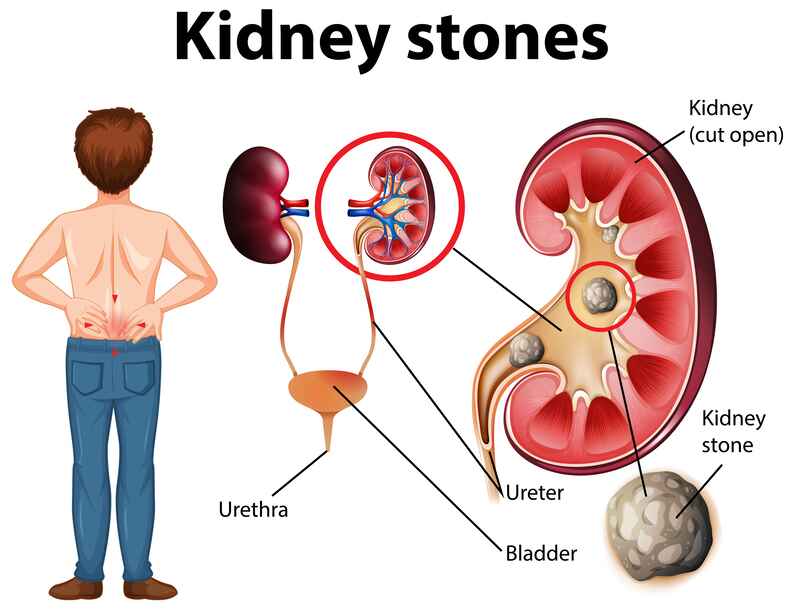
Back pain is extremely common, but pain in the back or side can sometimes be caused by a kidney stone. Because the symptoms can overlap, it is not always easy to know what is causing the pain.
A simple clue is to look at where the pain starts, how deep it feels, how it changes with movement, and whether urinary symptoms occur.
Kidney stone pain often starts in the side or back and can spread toward the lower abdomen or groin. It may be severe and come in waves. Back pain caused by muscles or the spine is more often related to movement, posture, lifting, or physical activity.
However, pain location alone cannot confirm the cause. A doctor may need a physical examination, urine tests, blood tests, or imaging to determine whether a kidney stone is present.
Back Pain vs Kidney Stone Pain at a Glance
| Feature | Typical Musculoskeletal Back Pain | Kidney Stone Pain |
|---|---|---|
| Location | Usually lower or middle back | Often side/flank or back |
| Depth | May feel closer to muscles or spine | Often feels deep inside the side or back |
| Pain pattern | May be steady or linked to movement | Often severe and comes in waves |
| Movement | May worsen with bending, lifting, or certain positions | Usually not clearly relieved by changing position |
| Radiation | May spread into buttock or leg | May move toward lower abdomen or groin |
| Urinary symptoms | Usually absent | Blood in urine, painful urination, urgency, or difficulty urinating may occur |
| Nausea/vomiting | Less typical | Can occur with severe kidney stone pain |
| Fever/chills | Not typical | May indicate infection and needs medical attention |
These are general patterns, not a way to diagnose yourself. Kidney stones can cause different symptoms depending on their size and location.
1. Location and Depth: Where Does the Pain Start?
One of the most useful differences between ordinary back pain and kidney stone pain is where the pain is felt.
Back Pain: Location and Depth
Common musculoskeletal back pain is usually felt around the lower back or along the muscles beside the spine.
It may be related to:
- Muscle strain
- Poor posture
- Heavy lifting
- Prolonged sitting
- Exercise or physical activity
- Problems involving the joints or spine
The pain may feel sore, tight, aching, or tender. You may notice that certain movements or positions make it better or worse.
For example, bending forward, twisting, standing for a long time, or getting up from a chair may change the intensity of the pain.
Kidney Stone Pain: Location and Depth
Kidney stone pain is commonly felt in the side of the back, below the ribs, or in the flank. It can also move toward the lower abdomen and groin as the stone travels through the urinary tract.
Because the kidneys are located deep inside the abdomen toward the back, kidney stone pain can feel deep rather than like a sore muscle on the surface.
However, kidney stone pain does not always stay in one place. A stone that moves into the ureter—the tube carrying urine from the kidney to the bladder—can cause pain that changes location.
Important point
Pain in the back does not automatically mean you have a kidney problem.
Muscle, spine, nerve, abdominal, urinary, and other conditions can cause pain in a similar area. The location provides a clue, but it cannot establish the diagnosis.
2. How the Pain Feels
The quality of pain can also provide clues.
What Does Back Pain Feel Like?
Muscle or mechanical back pain is often described as:
- Aching
- Sore
- Tight
- Stiff
- Tender
- Pulling
- Burning in some cases
The pain may become worse after physical activity or certain movements.
For example, you might notice more pain when:
- Bending
- Twisting
- Lifting
- Sitting for a long time
- Standing for a long time
- Changing position
Not every case follows this pattern, but movement-related changes are common with musculoskeletal pain.
What Does Kidney Stone Pain Feel Like?
Kidney stone pain is often described as sharp, severe, or cramping. It can become intense and may come and go in waves.
Some people experience pain that:
- Starts suddenly
- Becomes extremely intense
- Comes in waves
- Moves from the side/back toward the lower abdomen or groin
- Is accompanied by nausea or vomiting
A larger stone can become stuck and block urine flow, causing significant pain.
3. Kidney Stone Pain May Move
One important feature of kidney stone pain is that the location can change.
A stone may begin causing pain around the flank or side of the back. As it travels through the ureter, the pain may move toward the lower abdomen or groin.
This happens because the stone is moving through the urinary tract rather than simply irritating a back muscle.
NIDDK lists sharp pain in the back, side, lower abdomen, or groin as a possible symptom of kidney stones.
4. Urinary Symptoms Can Point Toward a Kidney Stone
Urinary symptoms are an important clue that the pain may not simply be ordinary back pain.
Possible kidney stone symptoms include:
- Blood in the urine
- Pain or burning while urinating
- Frequent need to urinate
- Difficulty urinating
- Passing only a small amount of urine
- Cloudy urine
- Bad-smelling urine
Not everyone with a kidney stone will have all of these symptoms. A small stone may even pass without noticeable symptoms.
5. Nausea and Vomiting
Severe kidney stone pain can occur with nausea and vomiting.
Nausea by itself does not prove that a kidney stone is present. But severe flank pain combined with nausea, vomiting, and urinary symptoms deserves medical evaluation.
6. Does Changing Position Relieve the Pain?
This can sometimes provide a useful clue.
With many types of mechanical back pain, changing position or avoiding a painful movement may alter the pain.
Kidney stone pain can be different. Because it is caused by irritation or obstruction within the urinary tract, changing your sitting or sleeping position may not provide reliable relief.
However, this is not a diagnostic test. Some people with kidney stones may move around trying to find a comfortable position, and other causes of severe back pain can also behave differently.
7. Back Pain vs Kidney Stone Pain: A Simple Comparison
More suggestive of ordinary back pain
- Pain began after lifting, exercise, or prolonged sitting
- Pain changes with movement
- Muscle stiffness or tenderness is present
- No urinary symptoms
- No blood in the urine
- No nausea or vomiting related to the pain
More suggestive of kidney stone pain
- Sudden severe pain in the flank or side
- Deep pain below the ribs toward the back
- Pain comes in waves
- Pain travels toward the lower abdomen or groin
- Blood appears in the urine
- Burning or pain while urinating
- Frequent urge to urinate
- Nausea or vomiting
These features can overlap with other medical conditions, so they should not be used as a substitute for diagnosis.
8. Can Kidney Stones Cause Lower Back Pain?
Yes. Kidney stones can cause pain in the back or side, particularly around the flank area. The pain can also spread to the lower abdomen or groin.
But lower back pain is much more commonly associated with musculoskeletal causes. Therefore, having lower back pain alone does not mean you have a kidney stone.
The presence of urinary symptoms, severe wave-like pain, blood in the urine, nausea, or pain radiating toward the groin can provide additional clues.
9. Can a Kidney Stone Cause Pain on Only One Side?
Yes. Kidney stones can cause pain on one side because a stone may be located in one kidney or one ureter.
Pain can occur on either side depending on which urinary tract is affected.
A small stone may cause little or no pain, while a stone that becomes stuck and blocks urine flow can cause severe symptoms.
10. When Is Back or Side Pain an Emergency?
Seek urgent medical attention if you have severe or worsening pain, particularly if it occurs with:
- Fever
- Chills
- Vomiting
- Blood in the urine
- Difficulty passing urine
- Severe weakness or feeling very unwell
A kidney stone can sometimes block urine flow and may be associated with a urinary or kidney infection. Kidney infections can cause back or side pain together with fever, chills, painful urination, nausea, or vomiting.
A blocked urinary tract combined with infection can require prompt treatment.
11. How Doctors Diagnose Kidney Stone Pain
Doctors do not diagnose kidney stones from pain location alone.
Evaluation may include:
Medical history
A doctor may ask:
- Where does the pain start?
- When did it begin?
- Is it constant or does it come in waves?
- Does it move?
- Do you have urinary symptoms?
- Have you had kidney stones before?
Urine testing
A urine test can look for blood, minerals, white blood cells, bacteria, and other findings that may help identify a stone or urinary infection.
Blood tests
Blood tests may help assess kidney function and identify certain abnormalities associated with stone formation.
Imaging
Imaging can help determine whether a stone is present and identify its size and location. CT scans can show the size and location of a stone and whether it is blocking the urinary tract.
12. What Should You Do If You Think You Have a Kidney Stone?
If you have mild pain without warning signs, arrange medical advice if the pain persists or returns.
If the pain is severe, sudden, or associated with fever, chills, vomiting, blood in the urine, or difficulty urinating, seek medical care promptly.
Treatment depends on factors such as the size and location of the stone and whether it is blocking urine flow. Some small stones pass naturally, while larger or obstructing stones may require medical treatment.
Frequently Asked Questions
How can I tell if my back pain is from my kidneys?
Kidney-related pain is often felt deeper in the side or flank rather than directly over the spine. Kidney stones may cause severe, wave-like pain that can travel toward the abdomen or groin and may occur with urinary symptoms.
However, symptoms alone cannot confirm the cause.
Is kidney stone pain worse than normal back pain?
Kidney stone pain can be extremely severe, especially when a stone becomes stuck or obstructs urine flow. However, pain severity varies from person to person and cannot by itself identify the cause.
Does kidney stone pain come and go?
Yes. Kidney stone pain may come and go in waves.
Where does kidney stone pain usually start?
It commonly starts in the side or back and may spread toward the lower abdomen or groin.
Can back pain and kidney stone pain feel similar?
Yes. Both can cause pain around the back or side. This is why additional symptoms, medical history, examination, urine testing, and sometimes imaging may be needed.
Final Takeaway
The key difference between back pain vs kidney stone pain is often the combination of location, depth, pain pattern, and accompanying symptoms.
Musculoskeletal back pain is often connected to movement, posture, physical activity, or muscle strain. Kidney stone pain is more commonly felt deeply in the flank or side, can become severe and come in waves, and may travel toward the lower abdomen or groin.
Urinary symptoms such as blood in the urine, painful urination, frequent urination, or difficulty passing urine make a urinary cause more concerning.
Important: Severe back or side pain with fever, chills, vomiting, blood in the urine, or difficulty urinating should be medically evaluated promptly.
Medical Disclaimer
This article is for general educational purposes and does not replace an examination or diagnosis by a qualified healthcare professional. Back and kidney pain can have many different causes. If symptoms are severe, persistent, or worsening, consult a doctor.
Medical Sources
- National Institute of Diabetes and Digestive and Kidney Diseases (NIDDK): Kidney Stones and Symptoms & Causes
- NIDDK: Diagnosis of Kidney Stones
- NIDDK: Kidney Infection Symptoms & Causes
- NHS: Kidney Stones — Symptoms and Overview