
Is Jaggery Better Than Sugar? A Health Coach Explains the Truth
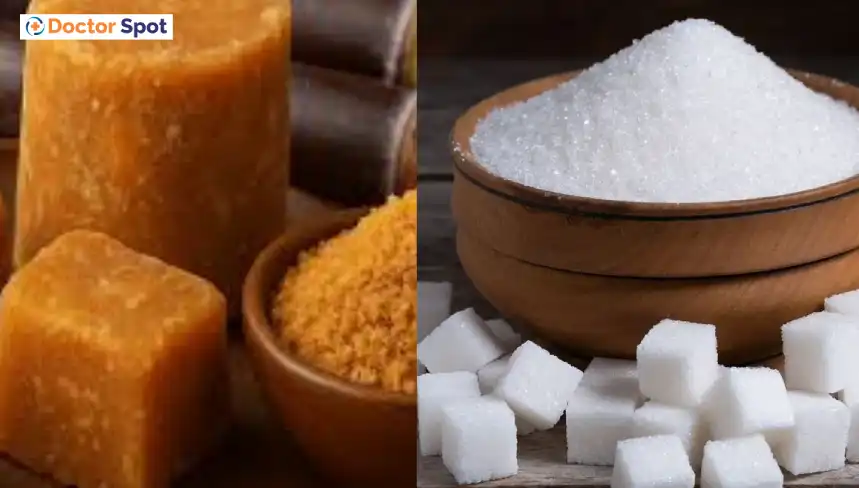
In the quest for a healthier lifestyle, one of the first ingredients to face scrutiny is often sugar. As people look for alternatives, jaggery—a traditional, unrefined sweetener—has gained a massive “health halo.” It’s natural, it’s packed with minerals, and it’s been used for centuries. But is jaggery actually better for you than white sugar?
We consulted metabolic health experts and recent studies to decode the truth behind the claim. The answer might surprise you.
What Are Jaggery and Sugar? Understanding the Basics
Before we dive into the debate, it’s essential to understand what these two sweeteners actually are.
Jaggery, commonly known as gur in India, is a natural sweetener made by boiling sugarcane juice or palm sap until it solidifies. Because it is minimally processed, it retains traces of molasses, which contain minerals and antioxidants .
Sugar (refined white sugar) is also derived from sugarcane, but it undergoes extensive refining. This process strips away the molasses and all other nutrients, leaving behind pure sucrose—empty calories with no vitamins or minerals .
At first glance, jaggery seems to have the edge simply because it’s less processed. However, a deeper look into the molecular makeup tells a different story.
The Nutritional Comparison: Is Jaggery Really Nutrient-Dense?
Proponents of jaggery often highlight its impressive mineral profile. And it’s true—on paper, jaggery contains iron, magnesium, potassium, and calcium .
| Nutrient | Jaggery (per 100g) | Refined Sugar (per 100g) |
|---|---|---|
| Calories | 380-383 kcal | 387 kcal |
| Sucrose Content | 65-90% | 99.9% |
| Iron | ~11 mg | 0 mg |
| Magnesium | 70-90 mg | 0 mg |
| Potassium | ~1000 mg | 0 mg |
| Glycemic Index (GI) | 84 (High) | 65 (High) |
Source:
However, context is key. As health coach Karan Sarin points out in his analysis with HT Lifestyle, the quantities of these minerals are too small to make a meaningful difference at normal serving sizes. To get any significant nutritional benefit from iron or magnesium, you would have to consume such a large amount of jaggery that it would wreak havoc on your blood sugar levels .
The Glycemic Index Shock: Does Jaggery Spike Blood Sugar?
This is where the “health coach decodes the truth” gets interesting. Most people assume that because jaggery is natural, it must be gentle on blood sugar. Science says the opposite.
The Glycemic Index (GI) measures how quickly a food raises blood sugar levels.
White Sugar has a GI of around 65.
Sugarcane Jaggery has a GI of around 84 .
This means that common sugarcane jaggery can spike your blood sugar faster than refined white sugar .
Karan Sarin tested this on himself using a continuous glucose monitor. He found that his blood sugar response to tea with sugar versus tea with jaggery was nearly identical: “sharp, fast, and significant in both cases” . This isn’t just anecdotal. A 2022 study published in the Journal of Future Foods compared coconut jaggery with cane sugar in type 2 diabetes patients and found no significant difference in post-meal blood sugar levels between the two .
Expert Insights: Why “Natural” Doesn’t Mean “Safe”
Medical professionals urge caution when viewing jaggery as a “healthy” alternative.
Dr. Almas Fatma, a General Physician, explains, “People often think that jaggery is a ‘healthier’ option because it contains more nutrients. But it’s still primarily sugar, which means it can impact blood sugar levels just like refined sugar” .
Dr. Rajiv Kovil, Head of Diabetology, echoes this sentiment, stating that while jaggery has enjoyed a “health halo,” it causes the same insulin resistance and fat storage as refined sugar .
This is a crucial point: Your body metabolizes the glucose and fructose from jaggery in the same way it does from white sugar .
Jaggery vs. Sugar: Specific Health Goals
So, which one should you choose based on your health objectives?
For Gut Health and Immunity
Some sources suggest jaggery aids digestion due to its fiber content and stimulates digestive enzymes . While traditional medicine (like Ayurveda) supports this, modern science notes that these benefits are often offset by the high sugar content. If you are looking to improve gut health, getting fiber from whole foods is far more effective than getting it from a sugar source .
For Weight Loss
Verdict: Neither is good.
Jaggery is calorically dense (383 kcal per 100g) and offers no fiber or protein to promote satiety. The high GI causes blood sugar spikes followed by crashes, which can actually increase hunger and cravings, hindering weight loss efforts .
For Diabetes Management
Verdict: Jaggery is NOT a safe substitute.
Diabetics are often advised to avoid jaggery. With a GI of 84, it causes rapid glucose spikes. The Apollo 24|7 team advises that for individuals with diabetes, the primary aim is to manage blood sugar levels, and substituting sugar with jaggery doesn’t assist in achieving this objective .
For Anemia
Verdict: Jaggery has a slight edge.
This is the one area where jaggery has a clear, albeit minor, advantage. With 11mg of iron per 100g, it can contribute to hemoglobin levels. However, for therapeutic benefits against anemia, doctors typically recommend standardized iron supplements or whole food sources like spinach and legumes, which don’t come with the high sugar load .
The Exception: Are There Healthier Types of Jaggery?
Not all jaggery is created equal. If you must consume jaggery, the source matters.
Sugarcane Jaggery: High GI (84+). Most common variety. Should be treated exactly like sugar.
Palm Jaggery / Palmyra Jaggery: Studies show this variety has a lower GI, ranging from 35 to 54 . This version is far less common but is metabolically a better option than sugarcane jaggery or white sugar.
Healthier Alternatives to Both
If the goal is to reduce sugar spikes and improve metabolic health, experts agree that replacing sugar with jaggery is not the solution. Instead, consider these alternatives:
Stevia: A zero-calorie, zero-GI natural sweetener derived from a plant .
Monk Fruit: Another zero-calorie option that is 150-250 times sweeter than sugar without the bitter aftertaste .
Allulose: A low-calorie sugar that does not spike blood sugar significantly .
Whole Fruits: Satisfy sweet cravings with fruits that contain fiber, which slows down sugar absorption .
Conclusion: The Final Verdict
So, is jaggery better than sugar? The truth decoded by health coaches and medical experts is nuanced:
Yes, jaggery is “better” in the sense that it is less processed and contains trace amounts of minerals. If you have to choose between sprinkling refined white sugar or a bit of jaggery on your dessert, jaggery wins by a tiny margin.
However, if you are consuming jaggery because you think it is “healthy,” “good for weight loss,” or “safe for diabetes,” the answer is a resounding NO. Metabolically, your body treats sugarcane jaggery very similarly to how it treats sugar—often with an even faster glucose spike .
The bottom line? Both are added sugars. Whether it comes from a cane or a factory, your body sees glucose and fructose. The key to good health isn’t switching from one sugar to another—it’s moderation and, where possible, switching to zero-impact sweeteners or whole foods .
Frequently Asked Questions
Q: Can I eat jaggery daily?
A: You can, but you should treat it like your daily sugar limit. The WHO suggests limiting added sugars to less than 10% of your total calories. A teaspoon of jaggery contains a similar amount of sugar and calories as white sugar.
Q: Is palm jaggery good for diabetics?
A: Palm jaggery has a lower glycemic index (around 35) than sugarcane jaggery, making it a comparatively better option. However, “better” does not mean “safe.” Diabetics should still consume it with extreme caution and consult their doctor .
Q: Does jaggery cause weight gain?
A: Yes, if consumed in excess. It is high in calories (sucrose) and can contribute to a caloric surplus, leading to weight gain just like sugar .
Q: Why is jaggery considered hot?
A: In traditional medicine systems like Ayurveda, jaggery is considered to generate heat in the body. This is why it is often recommended for consumption in winter and avoided during summer months by some .
Disclaimer: This article is for informational purposes only and does not constitute medical advice. Always seek the advice of your physician or a qualified health provider with any questions you may have regarding a medical condition or dietary changes.